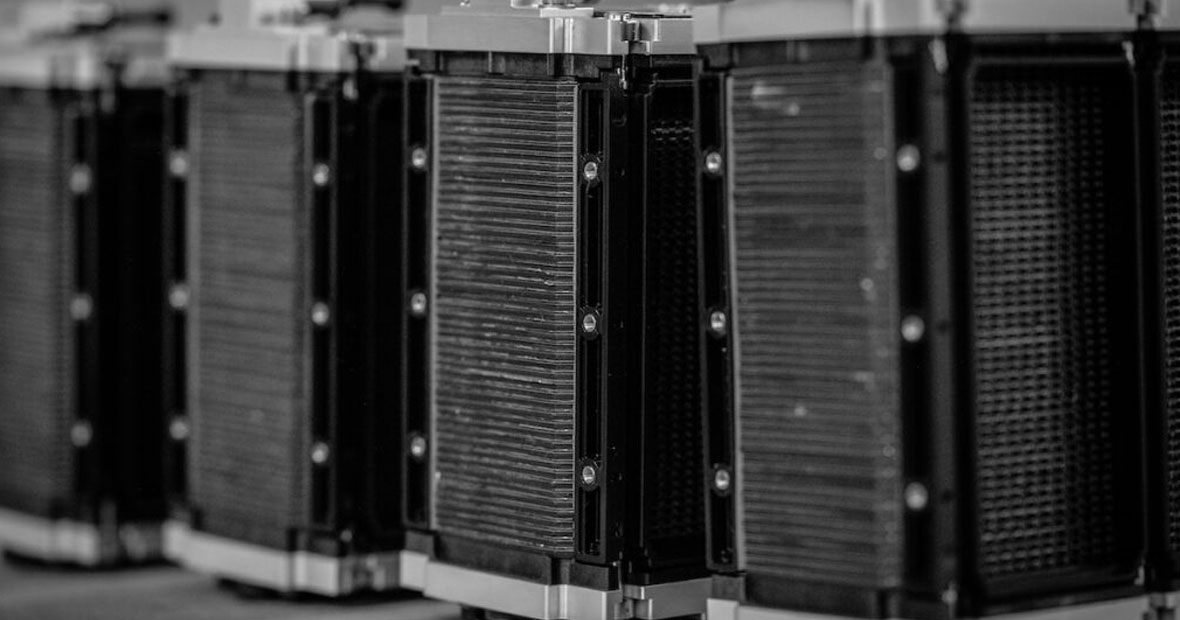
The energy transition faces a persistent challenge: not all sectors can be electrified with batteries alone. While lithium-ion technology dominates consumer electronics and light vehicles, industrial operations requiring megawatt-scale power, rapid refueling, and multi-day autonomy expose fundamental limitations of battery chemistry.
Hydrogen fuel cells emerge as the solution where battery electrification proves impractical. Organizations investigating zero-emission alternatives for heavy-duty operations are discovering that fuel cells don’t merely complement batteries—they enable applications that batteries cannot economically serve. Companies like EODev demonstrate this through commercial deployments in maritime, port equipment, and off-grid power generation, proving the technology’s viability beyond pilot projects.
The strategic value lies not in replacing batteries universally, but in identifying irreplaceable use cases where hydrogen’s unique properties—energy density, refueling speed, and long-duration storage—create operational advantages no other technology can match. This article reveals where hydrogen fuel cells transform industries, from hard-to-abate sectors to practical implementation strategies that optimize both performance and economics.
Hydrogen’s Strategic Advantage: The Key Points
- Fuel cells dominate where power density exceeds 1 MW and operational cycles demand rapid refueling under 10 minutes
- Distributed hydrogen production transforms organizations from energy consumers to autonomous producer-consumers
- Long-duration storage (weeks to months) solves renewable intermittency that batteries cannot economically address
- Diesel displacement in mission-critical operations shows 3-5 year ROI despite higher upfront costs
- Hybrid fuel cell-battery systems reduce total cost by 30-50% while maintaining zero-emission operation
Decarbonizing Hard-to-Electrify Sectors Where Batteries Fall Short
Industrial decarbonization confronts a technical threshold where battery solutions become physically impossible. Maritime vessels requiring continuous megawatt-scale power for multi-day voyages cannot carry sufficient battery mass without eliminating cargo capacity. Aviation ground support equipment operating in extreme temperatures faces catastrophic battery performance degradation that renders electric alternatives operationally unreliable.
The differentiation emerges from physics, not incremental engineering improvements. Hydrogen’s gravimetric energy density—approximately 120 MJ/kg compared to lithium-ion’s 0.9 MJ/kg—creates a hundred-fold advantage in applications where weight determines viability. Port cranes, mining equipment, and heavy transport operating continuous duty cycles require power-to-weight ratios that battery chemistry fundamentally cannot deliver at commercial scale.
Refueling economics compound these advantages. A hydrogen fuel cell system recharges in five to ten minutes, matching diesel’s operational model. Battery systems requiring hours of charging transform operational workflows, necessitating fleet multiplication to maintain productivity. In port operations handling time-sensitive cargo, this temporal constraint eliminates battery electrification regardless of environmental mandates.
| Sector | Abatement Cost (€/tCO2) | Key Dependencies | Primary Solution |
|---|---|---|---|
| Aviation | 300-1000 | H2 + non-fossil CO2 | Hydrogen-based SAF |
| Chemical Feedstock | 300-1000 | H2 + non-fossil CO2 | Synthetic fuels |
| Maritime Shipping | 150-400 | H2 only | Ammonia fuel |
| Steel Production | 100-300 | H2 only | Direct reduction |
Temperature resilience further separates hydrogen from batteries in extreme environments. Arctic mining operations and desert construction sites experience temperatures where lithium-ion cells lose 40-60% of rated capacity. Fuel cells maintain consistent performance across operational temperature ranges, eliminating the need for complex thermal management systems that add weight, cost, and failure points.
Aviation and Maritime Sector Transitions
For aviation, electrification is limited to short-range or hybrid solutions due to weight and energy density constraints. Sustainable aviation fuels and hydrogen are key for longer flights. Maritime can benefit from biofuels, hydrogen derivatives, and electric propulsion for long-term decarbonization. These sectors illustrate how hydrogen addresses fundamental limitations that battery technology cannot overcome within foreseeable chemistry advancements.
Heavy-duty applications in port environments demonstrate where these advantages converge into operational necessity. Equipment operating multi-shift cycles cannot afford battery charging downtime, while the confined spaces and emission regulations of modern ports make diesel generators increasingly untenable.

The strategic implication for procurement decisions is clarity: sectors requiring sustained multi-megawatt power, sub-10-minute refueling, or operation in temperature extremes face a binary choice between hydrogen and continued fossil fuel dependence. Battery electrification is not a viable intermediate step—it’s a fundamentally different technology serving different use cases.
Enabling Energy Independence Through Distributed Hydrogen Production
The conventional energy model positions organizations as perpetual consumers, vulnerable to grid instability, price volatility, and geopolitical supply disruptions. Distributed hydrogen production inverts this relationship, transforming facilities into energy producer-consumers who generate, store, and dispatch power autonomously.
On-site electrolysis enables organizations to produce hydrogen during off-peak grid periods when electricity costs drop by 60-70%, then convert that stored energy back to electricity during peak demand or grid outages. This arbitrage strategy creates predictable energy economics, insulating operations from the price fluctuations that compromise long-term financial planning. Data centers, hospitals, and manufacturing facilities where downtime costs exceed €10,000 per minute find that fuel cell investment achieves payback within months when grid reliability is factored into total cost models.
The global expansion of electrolyzer infrastructure validates this transition. By the end of 2024, installed water electrolyser capacity reached 5 GW worldwide, representing a tenfold increase from 2020 levels. This deployment is concentrated in industrial facilities seeking energy autonomy rather than centralized production, signaling a fundamental shift in how organizations approach power procurement.
Industries adopting captive hydrogen generation benefit from enhanced operational autonomy, improved process efficiency, and greater control over production costs.
– Future Market Insights, Metal Hydrogen Generation Market Report
Geopolitical risk mitigation adds a strategic dimension beyond operational benefits. Manufacturing facilities in regions experiencing frequent grid disruptions or energy supply uncertainties use fuel cells to ensure production continuity. Unlike diesel generators that require continuous fuel delivery from external suppliers, on-site hydrogen production using local water and electricity creates complete supply chain independence.
The business model transformation extends beyond backup power. Organizations with excess renewable capacity—rooftop solar installations that curtail production during low-demand periods—redirect that otherwise-wasted energy into hydrogen production. This converts a sunk cost into stored value, fundamentally changing the return-on-investment calculation for renewable installations.
Transforming Intermittent Renewables Into Reliable Baseload Power
Renewable energy faces an unsolvable temporal problem: generation peaks don’t align with consumption patterns. Solar installations produce maximum output at midday when commercial demand is moderate, then go offline during evening peak consumption. Wind generation fluctuates unpredictably across hours and seasons. Industrial processes requiring 24/7 power cannot operate on intermittent supply, forcing continued reliance on fossil fuel baseload generation.
Hydrogen storage solves this temporal mismatch through a closed-loop ecosystem: renewable overproduction charges electrolyzers, producing hydrogen stored at scale, which fuel cells reconvert to electricity on-demand. Unlike batteries limited to hours of storage duration, hydrogen systems economically store weeks or months of energy, enabling seasonal shifting where summer solar surplus powers winter heating and industrial operations.
Capacity factor transformation demonstrates the economic impact. A solar installation with a typical 30% capacity factor—producing electricity only during daylight hours—becomes equivalent to a 90%+ baseload plant when paired with hydrogen storage. The facility generates maximum output whenever solar conditions allow, stores excess as hydrogen, then dispatches that stored energy during nights, cloudy periods, or seasonal low-production months. This converts unreliable renewables into dispatchable power indistinguishable from conventional baseload generation.
Large-scale storage infrastructure enables this transformation at industrial scale. Underground caverns and purpose-built pressure vessels can store massive quantities of hydrogen with minimal losses over extended periods, creating the energy reservoir that bridges renewable intermittency.
Real-world implementations validate this approach. Industrial facilities in Northern Europe use summer solar surplus to produce hydrogen for winter heating and power generation, achieving 100% renewable operation for processes previously dependent on natural gas. The economic tipping point occurs when renewable curtailment costs—wasted energy that could have been generated but was rejected due to grid oversupply—exceed hydrogen infrastructure investment. As renewable penetration increases, this threshold arrives sooner, making fuel cells financially rational before environmental mandates require them.
Long-duration storage capabilities distinguish hydrogen from batteries in grid-scale applications. While lithium-ion installations provide valuable frequency regulation and short-term peak shaving, they cannot economically store the terawatt-hours needed to bridge seasonal renewable variability. Hydrogen systems scale storage capacity independently from power output, allowing organizations to size infrastructure for their specific temporal energy profile rather than accepting battery chemistry’s fixed duration constraints.
The systemic role of fuel cells in renewable integration extends beyond individual facilities. Regional microgrids using hydrogen storage can island themselves from grid failures while absorbing local renewable generation that would otherwise be curtailed. This distributed resilience model creates energy systems robust against both technical failures and strategic disruptions, fundamentally restructuring how societies approach energy security. Those interested in how energy infrastructure reshapes operational capabilities can examine modern transportation infrastructure for parallel examples of systemic transformation.
Displacing Diesel Generators in Mission-Critical Operations
Diesel backup generators represent the incumbent technology hydrogen fuel cells are actively replacing today. Telecommunications facilities, data centers, and port equipment operators are migrating to fuel cells despite higher upfront capital costs because operational advantages create total cost of ownership parity within three to five years.
Silent operation eliminates the acoustic pollution that restricts diesel deployment in urban and residential proximity. Fuel cells produce 60 dB at one meter—conversational speech level—compared to diesel’s 90-100 dB requiring sound enclosures and distance setbacks. This enables indoor placement in occupied buildings, eliminating the real estate costs of separate generator facilities and the security vulnerabilities of external infrastructure.
Emissions compliance costs that burden diesel operations disappear with fuel cells. Urban emission control zones, port air quality regulations, and indoor air standards make diesel generators non-viable without expensive exhaust treatment adding €50,000-€200,000 to installations. Fuel cells produce only water vapor and heat, requiring no ventilation infrastructure, particulate filters, or NOx reduction systems. In jurisdictions tightening emission standards, this isn’t a cost advantage—it’s the difference between operational permission and prohibition.
Maintenance predictability further tilts total cost of ownership calculations. Diesel generators require oil changes, filter replacements, and component overhauls at intervals measured in hundreds of operating hours. Fuel cells operate with minimal moving parts, extending service intervals to thousands of hours with predictable degradation curves allowing accurate lifecycle budgeting. Telecommunications operators report 40% reductions in operational costs when factoring labor, consumables, and avoided downtime.
Performance data from real deployments provides the evidence skeptical decision-makers require. Port equipment installations demonstrate 99.9%+ uptime across multi-year operations, matching or exceeding diesel reliability while eliminating fuel delivery logistics in congested port environments. Data center operators achieve instantaneous failover—fuel cells maintain power within milliseconds of grid interruption without the 10-15 second lag diesel engines require to start and stabilize.
The forced migration from diesel creates market pull stronger than environmental incentives alone. Facilities in emission control zones face binary choices: invest in fuel cells or cease operations. This regulatory pressure, combined with operational advantages and approaching cost parity, explains why diesel displacement represents the largest current market for stationary fuel cells rather than speculative future applications.
Key Takeaways
- Hydrogen fuel cells dominate applications requiring megawatt-scale power with rapid refueling where battery mass penalties eliminate viability
- Distributed hydrogen production enables energy sovereignty, transforming organizations into autonomous producer-consumers immune to grid volatility
- Seasonal energy storage through hydrogen systems solves renewable intermittency across timeframes batteries cannot economically serve
- Diesel displacement in mission-critical operations achieves ROI within 3-5 years through operational advantages beyond emission reduction
- Hybrid architectures combining fuel cells and batteries reduce system costs by 30-50% while optimizing performance for variable loads
Optimizing Economics Through Strategic Fuel Cell-Battery Hybridization
The market narrative presents a false binary: hydrogen versus batteries. Operational reality reveals that the most economically successful deployments use hybrid systems where fuel cells provide baseload power and range extension while batteries handle transient peaks and regenerative energy capture. This architectural approach reduces both fuel cell sizing requirements and battery capacity needs, lowering total system cost by 30-50% compared to pure fuel cell installations.
The rationale emerges from matching technology characteristics to load profiles. Fuel cells deliver consistent power efficiently across narrow output ranges but respond slowly to rapid demand changes. Batteries excel at instantaneous power delivery and can recapture regenerative energy but degrade quickly under continuous high-power cycling. Hybrid systems exploit each technology’s strengths: fuel cells maintain steady baseline loads while batteries absorb peaks, accelerations, and regenerative braking.
Economic optimization occurs through right-sizing components. A port crane experiencing occasional peak loads of 500 kW but averaging 200 kW continuous operation would require an oversized 500 kW fuel cell in a pure system. The hybrid alternative uses a 200 kW fuel cell for baseload plus a smaller battery bank handling peaks, reducing fuel cell capital costs while extending battery life through reduced cycling depth.
Use case decision frameworks help organizations determine appropriate configurations. Constant high-power applications—baseload industrial processes, long-haul maritime propulsion—favor pure fuel cell systems where load variability is minimal. Variable load applications with predictable duty cycles—port equipment, construction machinery, heavy transport—achieve optimal economics through hybridization. Understanding these distinctions prevents both over-investment in unnecessary complexity and under-specification that compromises performance.
Implementation examples demonstrate real-world hybrid configurations and their performance profiles. Port equipment operators deploy 150 kW fuel cells paired with 50 kWh battery packs, achieving 12-hour shift operation with five-minute refueling. Heavy transport vehicles use fuel cells for highway cruising range while batteries provide urban acceleration and hill climbing power. Backup power systems maintain fuel cells at ready-state idle while batteries instantly bridge the subsecond startup period, eliminating the milliseconds of interruption even hot-standby diesel generators cannot avoid.
The practical implementation knowledge that existing content omits centers on control strategies and energy management systems. Intelligent hybridization requires software determining instantaneous power allocation between fuel cells and batteries based on state of charge, load demand forecasting, and component efficiency curves. Organizations can explore industrial innovations in related fields to understand how advanced materials and control systems enable these optimizations.
The hybrid approach resolves the adoption barrier between theoretical benefits and practical economics. Pure fuel cell systems remain capital-intensive for many applications, while pure battery solutions face operational constraints that eliminate viability. Hybridization provides the implementation pathway that achieves zero-emission operation within acceptable financial parameters, accelerating deployment across sectors where neither technology alone creates compelling business cases.
Frequently Asked Questions on Hydrogen Energy
What is the primary advantage of hydrogen fuel cells over batteries in industrial applications?
Hydrogen fuel cells provide superior energy density (120 MJ/kg vs. 0.9 MJ/kg for lithium-ion), enabling applications requiring sustained megawatt-scale power where battery mass becomes prohibitive. They also offer rapid refueling in 5-10 minutes compared to hours of battery charging, maintaining operational productivity in time-sensitive environments.
How does distributed hydrogen production enable energy independence?
On-site electrolysis allows organizations to produce hydrogen during low-cost off-peak periods, store it, and generate electricity on-demand regardless of grid availability. This transforms facilities from energy consumers into autonomous producer-consumers, eliminating vulnerability to grid instability and price volatility while creating predictable energy economics.
What makes hybrid fuel cell-battery systems more economical than pure systems?
Hybrid architectures match each technology to its optimal use: fuel cells handle steady baseload power efficiently while batteries manage transient peaks and regenerative capture. This allows downsizing both the fuel cell (no need to accommodate peak loads) and battery capacity (reduced cycling depth), reducing total system costs by 30-50% while maintaining zero-emission operation.