
With freight rates climbing sharply and container space at a premium, building materials importers face mounting pressure to optimize every cubic meter. Mixed-load containers—shipping WPC wall panels alongside SPC flooring in a single container—offer one solution. But the approach works only under specific conditions.
For distributors sourcing WPC panels and SPC flooring from China, the question isn’t whether to consolidate products—it’s whether consolidation makes sense for their specific order profile. A 40-foot container holds approximately 67 cubic meters of space. Filling it with a single product line often means over-ordering, tying up capital in slow-moving inventory.
Mixed-load shipping changes the equation. Combining decorative panels and flooring products in one shipment can reduce per-unit logistics costs, balance warehouse stock levels, and accelerate market testing for new product lines. The challenge lies in execution: weight distribution, customs classification, and supplier coordination all require deliberate planning.
Mixed-Load Decision in 30 Seconds:
- Mixed containers work best when order volume per product is below full-container quantities but combined totals fill the container
- WPC panels (lighter) and SPC flooring (denser) can complement each other for weight-to-volume optimization
- Each product type requires separate HS code classification—plan documentation accordingly
- Suppliers with established export operations typically handle mixed orders without extended lead times
What Mixed-Load Containers Mean for Building Materials Importers
The standard approach to importing decorative panels involves ordering full container loads of a single product. A 20-foot container holds around 33 CBM; a 40-foot unit offers roughly 67 CBM. For large distributors with predictable demand, this model works. Smaller importers or those testing new markets face a different reality.
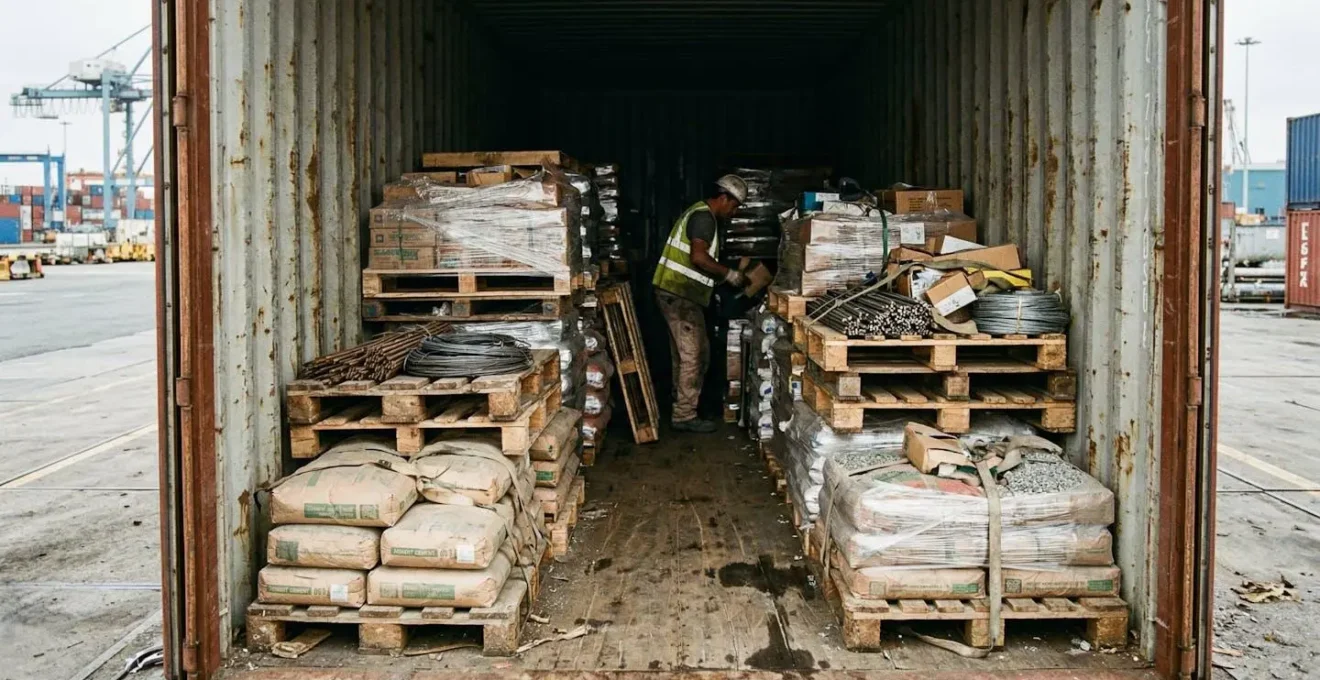
Ordering full containers of both WPC wall panels and SPC flooring doubles the minimum commitment. Warehouse space fills quickly. Cash flow tightens. Mixed-load containers address this by combining product types in a single shipment. Working with manufacturers like XHWOOD that specialize in multi-product container exports simplifies the process—their loading plans optimize weight distribution across different panel and flooring products.
The cost pressure is measurable. According to the 2025 UNCTAD Review of Maritime Transport, container freight rates in 2024 averaged 149% above the prior year. Every cubic meter of unused space translates directly to lost margin.
Not every factory handles mixed orders well. The capability gap shows in production coordination: can the supplier manufacture WPC panels and SPC flooring on parallel timelines, ready for simultaneous loading? Factories with 10+ years of B2B export experience typically have this workflow mastered.
Container Capacity Reference: A standard 20ft container offers approximately 33 CBM with a weight limit around 28 metric tons. A 40ft container provides roughly 67 CBM with a 26-28 MT limit depending on destination. Building materials often “weight out” before “cubing out”—meaning weight limits are reached before space is filled.
Three Scenarios Where WPC and SPC Mixed Loading Works
Mixed-load containers aren’t universally superior to single-product shipments. The approach makes sense under specific business conditions. Three scenarios consistently justify the coordination effort involved.
Testing New Product Lines With Controlled Volume
Introducing a new WPC panel finish or SPC flooring pattern to a market carries risk. Ordering a full container of an unproven SKU ties up capital in inventory that may not sell. Mixed loading allows distributors to include 10-15 CBM of test products alongside established sellers, gauging market response without overcommitting.

The financial logic favors this approach when the alternative is either skipping the test entirely or committing to a full container and absorbing potential dead stock costs. A mixed shipment distributes the risk.
Balancing Heavy Panels With Dense Flooring
WPC panels and SPC flooring have different weight-to-volume characteristics. WPC wall panels are relatively lighter per cubic meter, while SPC flooring—with its stone-based rigid core—runs denser. A container loaded entirely with SPC products may hit the weight limit before filling the available space (industry term: “weighing out”).
Combining lighter WPC panels with heavier SPC flooring can optimize the weight-to-volume ratio. The goal: fill the container’s cubic capacity while staying under weight limits. This requires a loading plan from the manufacturer specifying placement by product type and weight.
Matching Project Timelines With Single Shipments
Construction projects often require multiple material types delivered on the same timeline. A hotel renovation needs wall cladding and flooring to arrive simultaneously for coordinated installation. Ordering separate containers for each product category creates scheduling complexity—and doubles the receiving workload.
Mixed-load shipping consolidates materials needed for a single project into one shipment. The importers who benefit most are those serving project-based contractors rather than retail distribution.
These three scenarios—market testing, weight optimization, and project consolidation—define the sweet spot for mixed containers. Outside these conditions, single-product FCL shipments often remain simpler and more predictable.
Is Mixed Loading Right for Your Next Order?
-
Your per-product volume is below 33 CBM:
Mixed loading likely makes sense—you’re not filling a container with any single SKU anyway.
-
You’re introducing untested products:
Include them in a mixed container with proven sellers to limit downside.
-
Your order includes both heavy and light products:
Mixed loading can optimize weight-to-volume utilization—request a loading plan from the factory.
-
You’re supplying a single project requiring multiple materials:
Consolidate into one shipment to simplify logistics and align delivery timing.
Loading Plan Essentials for WPC and SPC Combinations
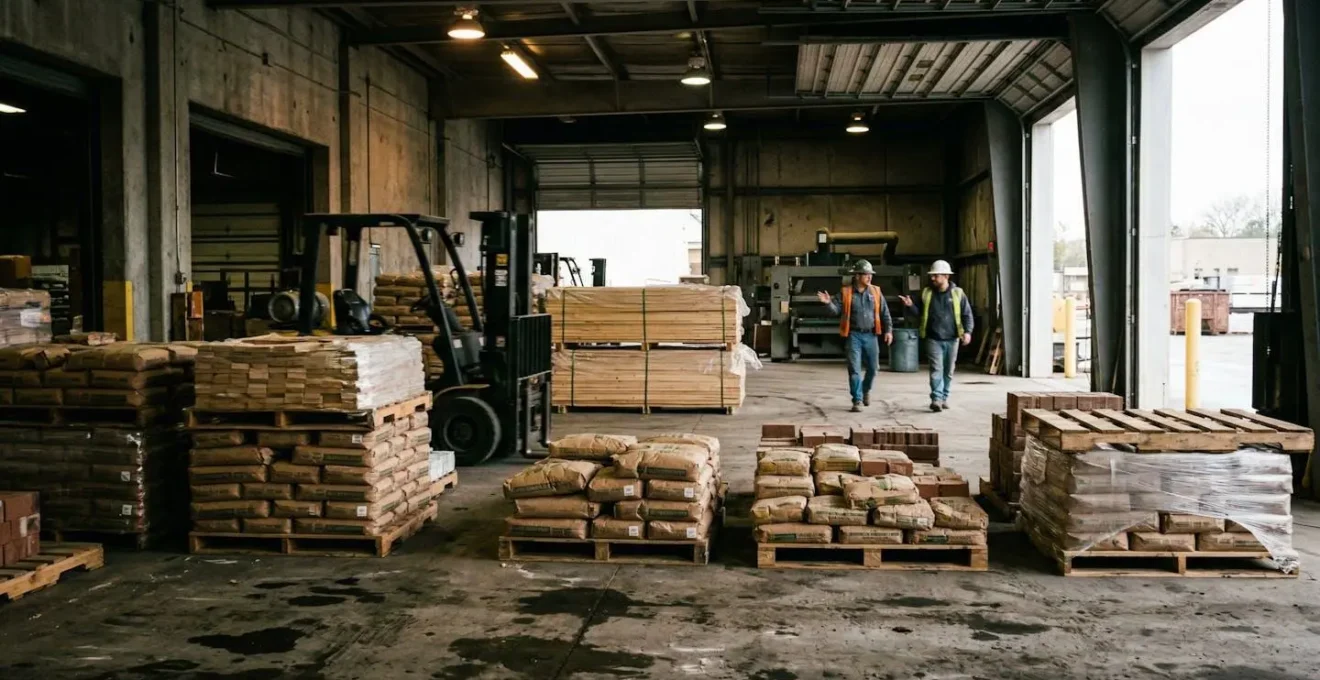
Getting mixed-load containers right depends on the loading plan. This document, typically prepared by the manufacturer, specifies how products are arranged inside the container—which items go first, where heavy pallets sit, how protection layers separate product types.
WPC panels and SPC flooring have different loading requirements. SPC flooring, with its rigid stone-polymer core, weighs approximately 8-12 kg per square meter depending on thickness. WPC wall panels run lighter—typically 3-6 kg per square meter. Placing the heavier SPC pallets at floor level and near the container walls provides stability. Lighter WPC panels stack on top or fill the remaining space.
Dunnage—padding materials like cardboard dividers, foam sheets, or wooden separators—prevents friction damage during transit. Lashing straps secure pallets against shifting when the container is in motion. These aren’t optional extras; they’re baseline requirements for mixed loads.
Customs documentation adds complexity. According to ITA guidance on Harmonized System classification, each distinct product type in a container shipment requires its own HS code. WPC panels and SPC flooring fall under different tariff headings. The commercial invoice must list each product category separately with corresponding codes, quantities, and values.
Getting documentation wrong creates real exposure. Underreporting product categories or using incorrect HS codes can trigger inspections, delays, or penalty duties. Experienced importers understand the risks of customs fee spikes that arise from classification errors. Accuracy upfront prevents complications downstream.
Before placing a mixed-load order, verify these preparation steps with your supplier:
Your Mixed-Load Order Preparation
-
Confirm the factory can produce all product lines on coordinated timelines
-
Request a detailed loading plan showing product placement by weight and volume
-
Verify HS codes for each product category before shipment
-
Review dunnage and lashing requirements for product protection
-
Clarify pre-shipment inspection protocols for multi-product orders
-
Obtain container photos at loading completion for your records
Your Questions About Mixed Container Orders
Importers considering mixed-load containers for the first time typically share the same concerns. These questions address the most common objections.
Common Concerns About Mixed Container Orders
Will mixing WPC and SPC products cause damage during transit?
Product damage results from improper loading—not from the mix itself. With proper stacking sequences, dunnage layers, and lashing, WPC panels and SPC flooring can travel safely together. The risk factor is whether the manufacturer provides and follows a competent loading plan.
Are customs declarations more complicated for mixed loads?
Marginally. Each product type requires its own HS code, quantity, and declared value on the commercial invoice. This adds a few line items to documentation but doesn’t fundamentally change the clearance process. The regulatory backdrop is also tightening: under new IMO shipping rules effective January 2026, stricter maritime compliance requirements reinforce the value of accurate documentation from day one.
Do suppliers charge more for mixed orders?
Some factories add handling fees for the additional coordination required. Others—particularly those with established multi-product export workflows—absorb the complexity into their standard process. The variation depends on supplier capability, not industry norms.
What’s the minimum order per product for mixed loading?
This varies entirely by supplier. Some require minimum per-product volumes (often 5-10 CBM per SKU). Others set a container-level minimum and allow flexible allocation across products. Always clarify MOQ terms before committing to an order.
How does quality control work for multi-product shipments?
Pre-shipment inspection becomes more important for mixed orders. Each product type should be checked against specifications before loading. Request inspection reports covering all SKUs in the order, not just primary products.
Mixed-load containers represent one approach to optimizing import logistics—not a universal solution. The importers who benefit most are those whose order profiles match the scenarios outlined: market testing, weight-volume balancing, or project-based consolidation. Understanding when the model fits—and when a full container load remains simpler—strengthens negotiating position with suppliers.
For those sourcing sustainable building materials, the conversation extends beyond logistics. Understanding the principles of eco-responsible architecture adds context to product selection decisions that complement shipping optimization strategies.