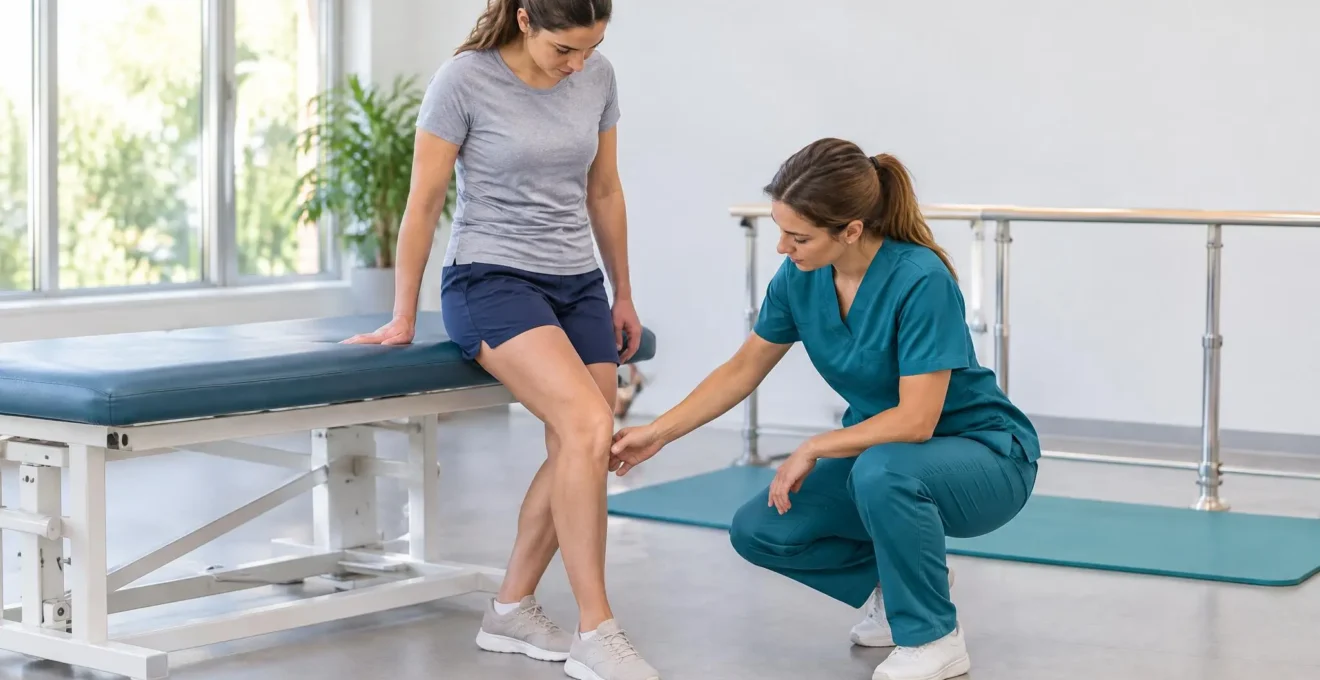
ACL reconstruction can improve knee stability by replacing a torn ligament and restoring an important mechanical restraint. However, current comparative research does not show that the operation reliably prevents knee osteoarthritis. A more stable knee is not necessarily protected from the long-term effects of the original injury.
The distinction matters when choosing treatment. Some people regain satisfactory knee function through structured rehabilitation, while others continue to experience instability that makes reconstruction worth considering. The most appropriate approach depends on symptoms, associated injuries, activity demands and individual goals.
How ACL reconstruction changes knee stability
The anterior cruciate ligament (ACL) helps limit excessive forward movement of the shinbone relative to the thighbone and contributes to rotational control. It is particularly important when changing direction, landing or suddenly slowing down.
When the ACL ruptures, the knee may lose some of this restraint. But the consequences vary: a person can have measurable ligament laxity without frequent giving-way, while another may struggle with ordinary movements or sport.
Mechanical laxity versus functional instability
Mechanical laxity describes excessive movement within the joint, assessed through clinical examination and sometimes specialised testing. Functional instability describes the difficulty a person experiences controlling the knee, including unexpected giving-way.
Muscle strength, coordination and movement control influence functional stability. That is why rehabilitation can improve symptoms even when the original ligament has not been surgically reconstructed.
Keeping track of the movements that provoke giving-way, such as pivoting, descending stairs or changing direction, can help explain the problem during an assessment. These observations are useful, but they cannot replace professional examination.
What a reconstructed ligament can restore
When an ACL-injured knee repeatedly gives way, understanding what reconstruction can physically restore becomes important. The surgical explanation provided by Prof. Etienne Cavaignac describes tendon grafts used to replace the damaged ligament and additional techniques that may be considered for rotational stability. These details help clarify the procedure, although better mechanical support does not guarantee protection from future osteoarthritis.
During reconstruction, a surgeon positions a tendon graft to replace the ACL’s stabilising function. The graft may come from hamstring, patellar or quadriceps tendon tissue. Additional anterolateral stabilisation is considered in selected cases rather than being necessary for everyone.
Recovery also depends on rehabilitation. Reconstructing a ligament does not immediately restore strength, coordination or confidence during demanding movements.
Does reconstruction prevent knee osteoarthritis?
A 2026 comparative systematic review examined 18 studies involving 33,540 patients, with an average follow-up of 12.3 years. It found no demonstrated reduction in radiographic osteoarthritis following reconstruction compared with nonoperative care. Considerable variation between studies limits how precisely this finding can predict an individual patient’s outcome.
The pooled analysis of 15 studies found no statistically significant difference in radiographic osteoarthritis. However, differences between studies were substantial (I²=92%), making the pooled estimate unsuitable as a precise clinical prediction. An analysis restricted to higher-quality studies also found no significant difference. These findings do not prove that the treatments have identical effects for every patient.
Osteoarthritis involves changes to the joint’s cartilage and other tissues. The initial ACL injury may also damage the meniscus or cartilage, and subsequent joint loading can influence long-term health. Restoring ligament restraint does not reverse every consequence of that original trauma.
It is also important to distinguish radiographic osteoarthritis, identified through imaging, from symptomatic osteoarthritis, which involves problems such as pain and stiffness. Imaging changes do not always correspond directly to how a knee feels or functions.
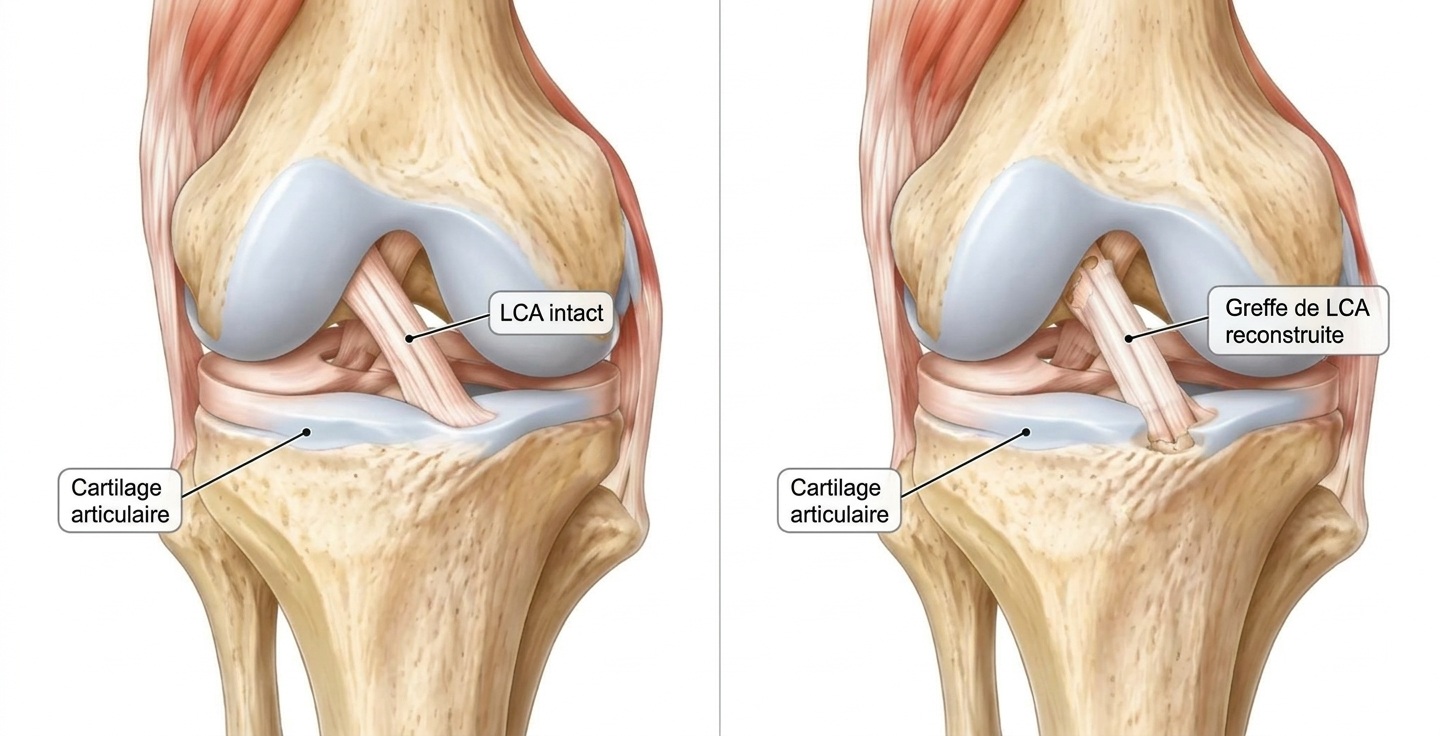
Some research reports different findings for other long-term outcomes, including knee replacement. Yet a difference in eventual replacement rates is not the same as showing that surgery prevents radiographic osteoarthritis. These outcomes should not be treated as interchangeable.
Reconstruction or rehabilitation: which approach fits?
Not every ACL tear requires reconstruction. The UK’s NHS guidance on ACL surgery explains that physiotherapy may help some patients, while frequent giving-way, demanding activities, unsuccessful rehabilitation or damage elsewhere in the knee can strengthen the case for a surgical assessment.
| Approach | Main objective | When it may fit | Important limitation |
|---|---|---|---|
| Rehabilitation first | Improve strength, movement control and function | Symptoms are manageable and stability is sufficient for desired activities | Some patients continue to experience giving-way |
| Early reconstruction | Restore a ligament restraint alongside rehabilitation | Persistent instability, demanding pivoting activity or relevant associated damage | Surgical risks, recovery demands and no guaranteed protection against osteoarthritis |
| Delayed reconstruction | Address instability remaining after initial rehabilitation | Functional limitations or repeated giving-way continue | Requires reassessment of symptoms, associated injuries and goals |
Structured rehabilitation without immediate surgery
A rehabilitation-first programme works on strength, balance, movement control and a gradual return to suitable activities. It also provides an opportunity to see how well the knee functions without immediate reconstruction.
For someone whose knee remains dependable during daily activities and desired exercise, this may be an appropriate long-term strategy. Persistent giving-way, however, warrants reassessment rather than simply continuing the same exercises indefinitely.
Early reconstruction for persistent demands
Reconstruction may be particularly relevant when instability interferes with demanding pivoting sports, physically intensive work or activities that repeatedly trigger giving-way. Associated meniscal or other structural injuries may also influence the recommendation.
Surgery brings its own risks and requires substantial rehabilitation. Even successful reconstruction does not make future joint degeneration impossible, so the decision should focus on achievable functional benefits rather than an arthritis-prevention promise.
Delayed reconstruction when instability continues
Some patients begin with rehabilitation and later choose reconstruction because their knee remains unreliable or they cannot return to important activities. This is a recognised treatment pathway, not necessarily evidence that initial rehabilitation was inappropriate.
The decision should be revisited with a clinician, especially if giving-way episodes continue or additional knee damage is suspected.
Does the timing of ACL surgery affect arthritis risk?
A 2026 surgery timing meta-analysis of 17 studies and 3,953 reconstructions associated earlier operations with a lower incidence of osteoarthritis than delayed reconstruction. However, this finding compares surgical timing among reconstructed knees; it does not establish that early surgery is preferable to rehabilitation-first management for every ACL injury.
Two comparisons, two questions: Reconstruction versus rehabilitation asks whether surgery improves long-term outcomes compared with nonoperative care. Early versus delayed reconstruction examines timing among patients who undergo surgery. Evidence from one comparison cannot automatically answer the other.
The timing studies followed patients for at least five years, but definitions of early and delayed surgery varied. Differences in injuries, associated meniscal procedures and patient characteristics can also influence the observed outcomes. An association with earlier surgery therefore does not establish one ideal deadline for everyone.
For a knee that remains unstable, the practical concern is avoiding repeated episodes and assessing possible associated damage while discussing treatment options. The appropriate timing depends on the individual injury and clinical findings, not on a universal calendar rule.
What should guide the treatment decision?
The most useful consultation begins with a clear description of what the knee can and cannot do. A person who feels stable during ordinary exercise may face a different decision from someone whose knee repeatedly gives way when turning or carrying out physical work.
- When does the knee give way, and during which movements?
- What has changed after a structured physiotherapy programme?
- Which sports, work tasks or everyday activities must the knee tolerate?
- Have a clinician’s examination and any appropriate imaging identified meniscal or cartilage damage?
- What rehabilitation and recovery commitments are realistic for the chosen treatment?
The first questions can be explored through personal experience and a record of symptoms. Identifying ligament laxity, associated structural injuries and treatment suitability requires professional assessment. A physiotherapist or knee specialist can relate these findings to functional goals.

Rehabilitation demands commitment whether surgery is performed or not. Rather than asking only whether reconstruction is better, patients can discuss which specific limitations the proposed treatment is expected to address, how progress will be assessed and what uncertainties remain.
ACL reconstruction can improve knee stability, but it has not been shown to reliably prevent osteoarthritis. When discussing treatment, the useful next step is to connect episodes of giving-way, progress during rehabilitation and the activities the knee must tolerate with a clinician’s assessment of associated injuries. The aim is to identify which limitation the proposed treatment may address—not to assume that restoring the ligament will prevent future arthritis.
This article provides general information and cannot determine whether an individual ACL injury requires surgery. A qualified clinician can assess instability, associated damage and treatment options in the context of your goals.